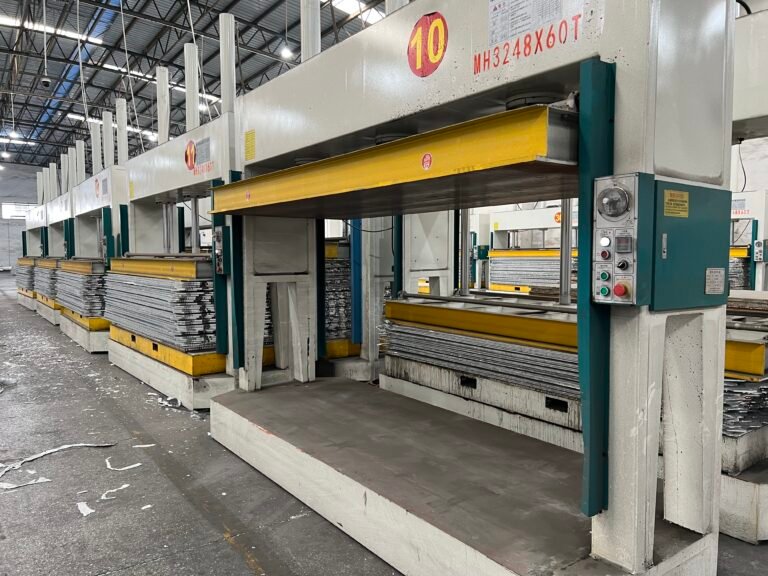
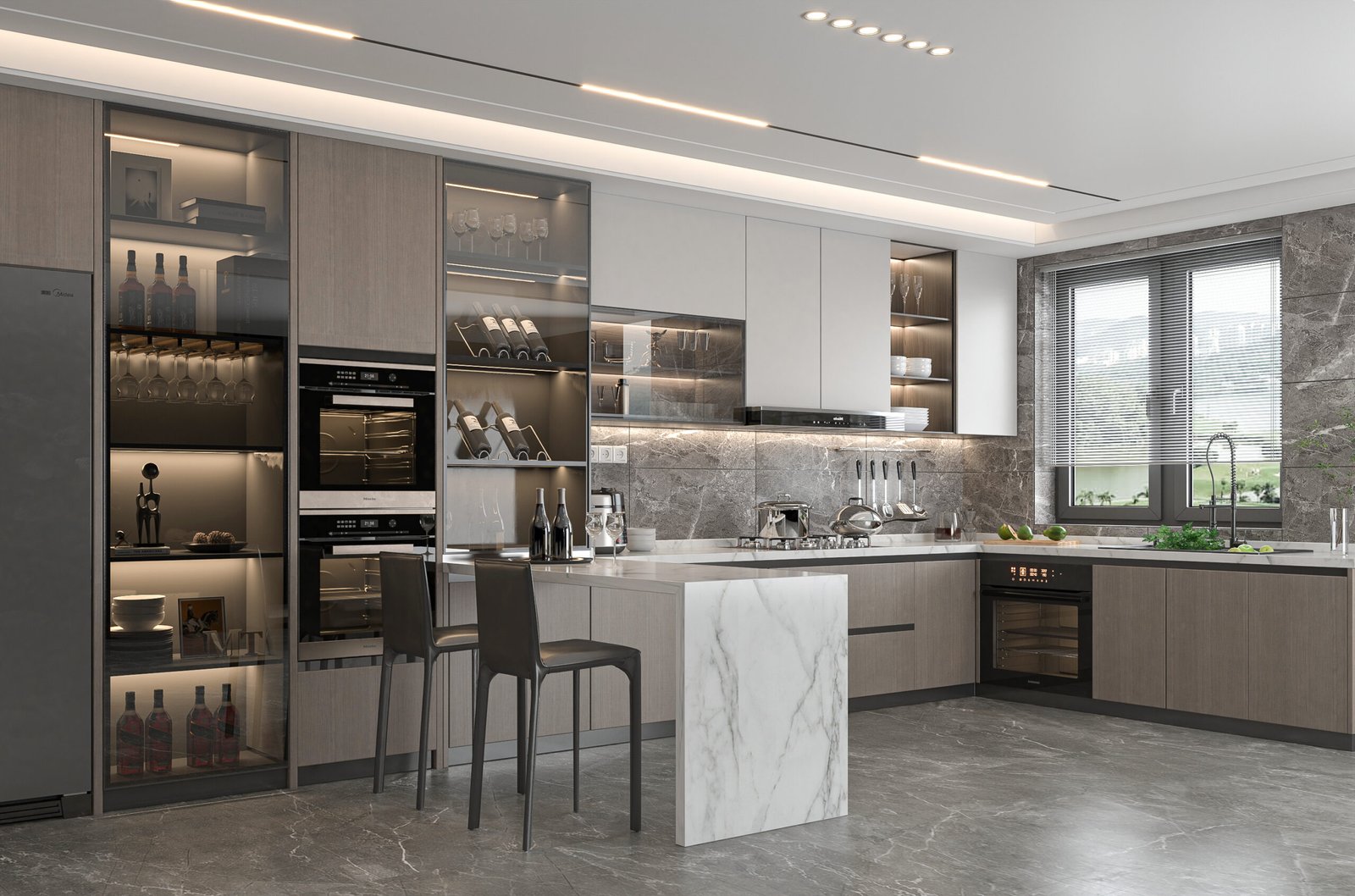
Aluminum furniture factories are asked for more customization every year, and the request usually arrives as a list: another size, another color, a taller door. Whether that list is easy to build or expensive to build depends less on how long it is than on how much of it lands on parts we already make.
Customization Needs Something Fixed to Stand On
In production, customization and standardization are layered rather than opposed. Five things are fixed before a project starts: panel thickness, core cell size, face skin thickness, the adhesive and edge band chain, and the hardware fixing method. Everything the customer sees or arranges sits on top of those five, and that is why a new size costs a new drawing rather than a new process.
The Panel System Is Standardized First
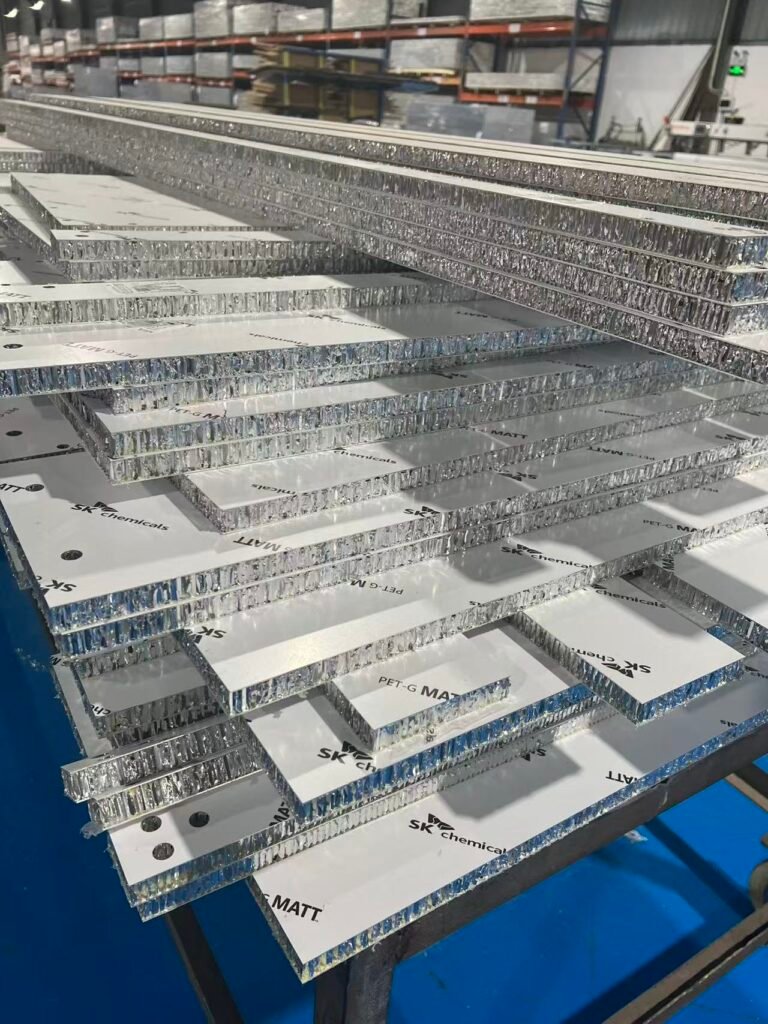
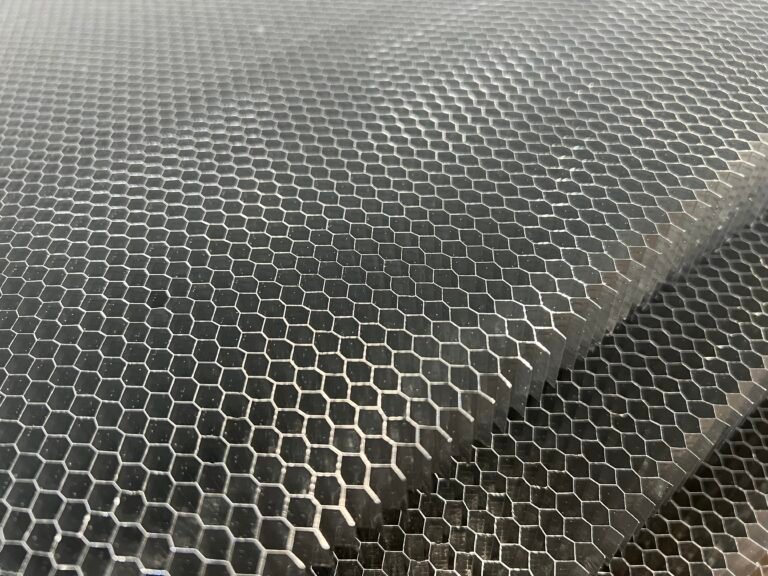
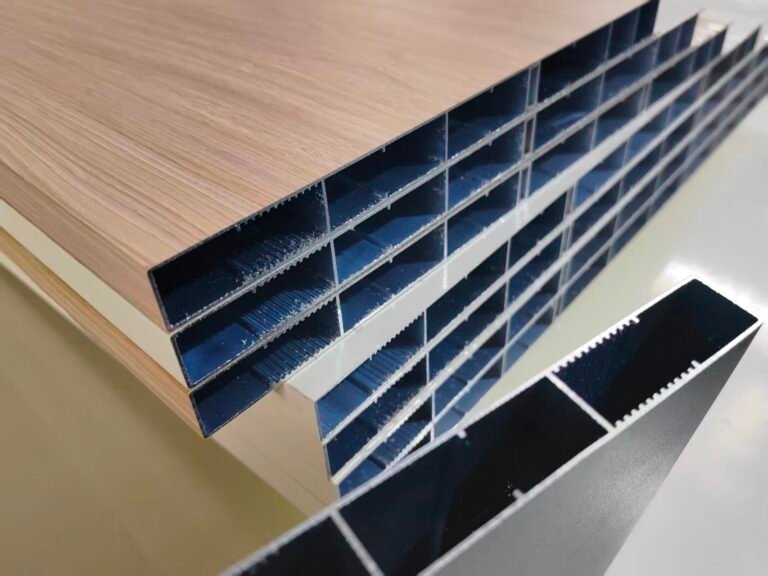
Panel thickness is fixed at 18 mm on every cabinet, and there is no second thickness to price. Core cell size is where the choice starts: 2 × 2 mm or 3 × 3 mm, with 2 × 2 mm as our standard because the denser core takes adhesive better and resists compression. Face skin runs from 0.65 mm to 1.0 mm in five steps: 0.65, 0.75, 0.8, 0.85 and 1.0 mm. The quoted thickness includes the surface treatment layer, so a bare aluminum figure is not comparable with it. Core and skins are bonded with a two-component polyester adhesive.
Dimensions Come From a Module, Not From Zero
Dimensions change most, and they are the part we keep on a grid. Welded aluminum panels are produced in 6 m lengths at 18 mm thick, in widths from 50 mm to 750 mm in 50 mm steps, with 300 mm to 750 mm covering most cabinetry work. A carcass that lands on those steps is cut on settings the floor already runs. One that misses them becomes a new setup, which is why the drawing comes before the quotation. Reusable modules work the same way: connecting parts and panel build repeat between orders while the visible dimensions move. The full specification set belongs in how to specify aluminum honeycomb panels for cabinetry.
What Stays Fixed and What We Leave Open
It helps to know which column a request falls into.
| Item | Fixed | Open to the project |
|---|---|---|
| Panel thickness | 18 mm on every cabinet | |
| Core cell size | 2 × 2 mm (standard) or 3 × 3 mm | |
| Face skin | 0.65 / 0.75 / 0.8 / 0.85 / 1.0 mm | |
| Panel size | 6 m long, 50–750 mm wide in 50 mm steps | |
| Surface finish | from our standard library | |
| Edge profile | standard or shaped | |
| Core-to-skin adhesive | Two-component polyester | |
| Edge band and adhesive | PVC band, PUR adhesive | |
| Connecting parts, hinge hole centers | Same system on every carcass | |
| Insert layout, door and shelf positions | Set by the project; we draw and you confirm |
The Surface System Is a Library
Surface finishing is where customers expect the most freedom, and where purchasing and quality control break down if the options are endless. We keep a standard library of colors and textures, and the project chooses from it; face skin thickness is chosen inside the library as well. Because those finishes have been run before, the first panel behaves like the hundredth: same shade, same texture, same adhesion. Anything outside the library should be raised at drawing stage.
Edge Bands and the Adhesive Chain
Edge banding is a hidden detail with a visible outcome. The band is PVC, bonded with a PUR adhesive that cures by reacting with moisture. A gap width will not settle acceptance, because there is no threshold to measure against; the condition is binary. The core has to be enclosed by the band and the adhesive. If it is not, the panel fails. Edge profiles come in two groups, standard shapes and shaped profiles outside that set, and the second group changes the tooling. What a failed band looks like later is set out in why aluminum honeycomb panel edges open.
Hardware: Fixed Hole Centers, Moving Insert Layout
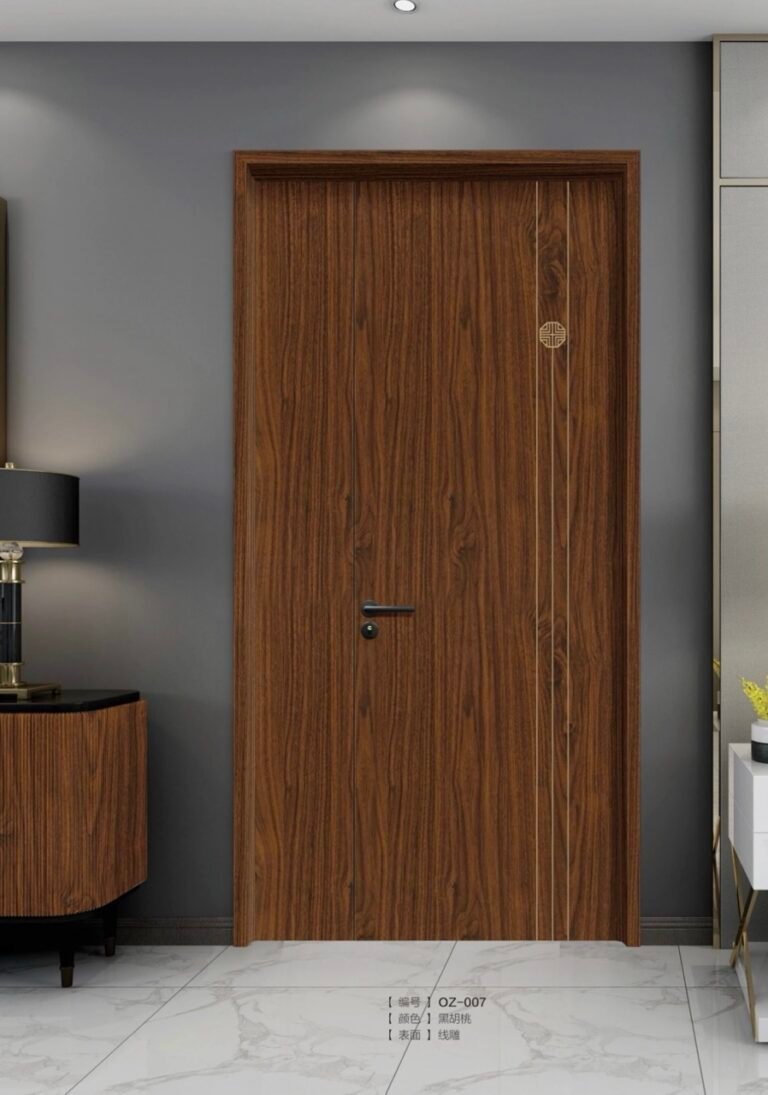
Hardware is fixed at the interface and free in the layout. Connecting parts and hinge hole centers are the same on every carcass, following the hinge model rather than the project. The insert layout moves: count and spacing follow door weight and size. Door height sets the hinge count with no gaps: two hinges to 900 mm, three from 900 to 2000 mm, four from 2000 to 2400 mm, five above 2400 mm. Each of those positions is a threaded brass insert, so the screw goes into metal rather than into an open core. This is our standard method on honeycomb panels at every door size.
Where Customization Changes the Price
Three choices in the table move the price, and the reason is process. Moving from a 2 × 2 mm core to 3 × 3 mm changes how the panel is built. A thicker face skin changes what has to run through the surface line. A shaped edge profile changes the tooling. The plant and the equipment are the same in each case; the settings are not, and the quotation follows the settings. A dimension inside the module usually costs nothing extra, and these three do.
What We Ask For and What We Send Back
Send the door positions, shelf positions and openings as a layout or a sketch. We draw the panel set and send it back for confirmation before anything is cut, and that is where a size that will not run on current settings gets caught. Lead time follows the same split as the rest of this article: standard items run from stock, and non-standard items are scheduled separately. Better to know that at drawing stage than at order stage. The earlier stage, while the concept is still being fixed, is set out in what designers need to consider before an aluminum furniture project starts.
Send Us Your Project Drawing
Send the layout, the door heights and the finish you have in mind. We will come back with the panel set, the hinge count those heights call for, and which of the items above move the price. For the hardware side, can aluminum honeycomb cabinet doors use standard hinges covers what has to be settled before sampling.