Furniture factories and cabinet manufacturers ask us the same question at the start of a new project: can aluminum honeycomb cabinet doors use standard concealed hinges?
In many cases they can. But that is not the question that decides whether the door works.
The question that decides it is whether the door was drawn to receive the hinge. A hinge is only as good as what it is fastened into, and on a honeycomb door that is not the panel face but a fixing zone designed in before the drawing reaches the machine. A solid board holds a screw through its whole thickness; a honeycomb panel holds it only where it finds something solid. What the panel can offer that zone is a question of panel selection, which how to choose the right aluminum honeycomb panel for cabinet applications works through.
What Should Be Checked Before Approving Hardware?
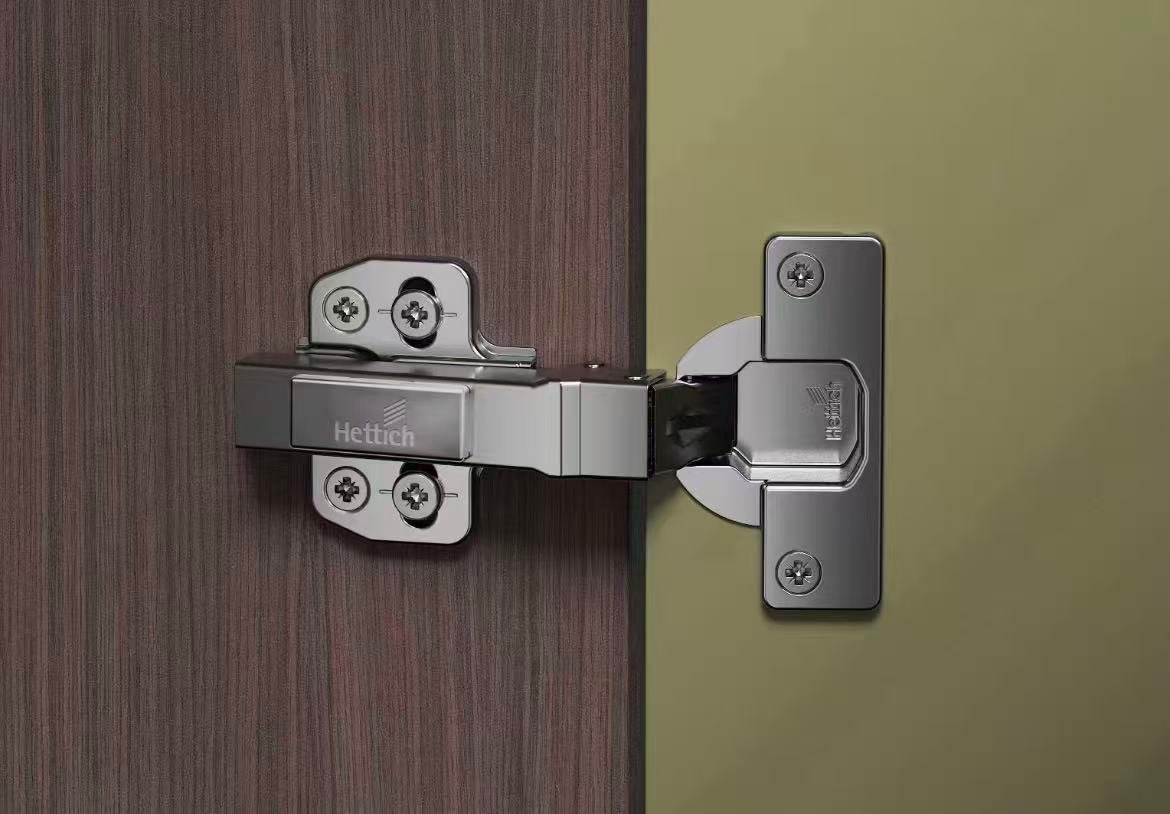
Hardware review starts with the door, not the hinge. Five things should be settled on the drawing before machining begins: door thickness, door size and weight, hinge model and installation height, bore position, and the structure behind the fixing zone.
The failure we see most often is a bore that looks correct in the front view, sitting where the hardware catalog puts it with nothing behind it for the screw to hold. That is a section question, and it has to be answered before the drawing is released.
Can Standard Hinges Be Directly Installed on Aluminum Honeycomb Doors?
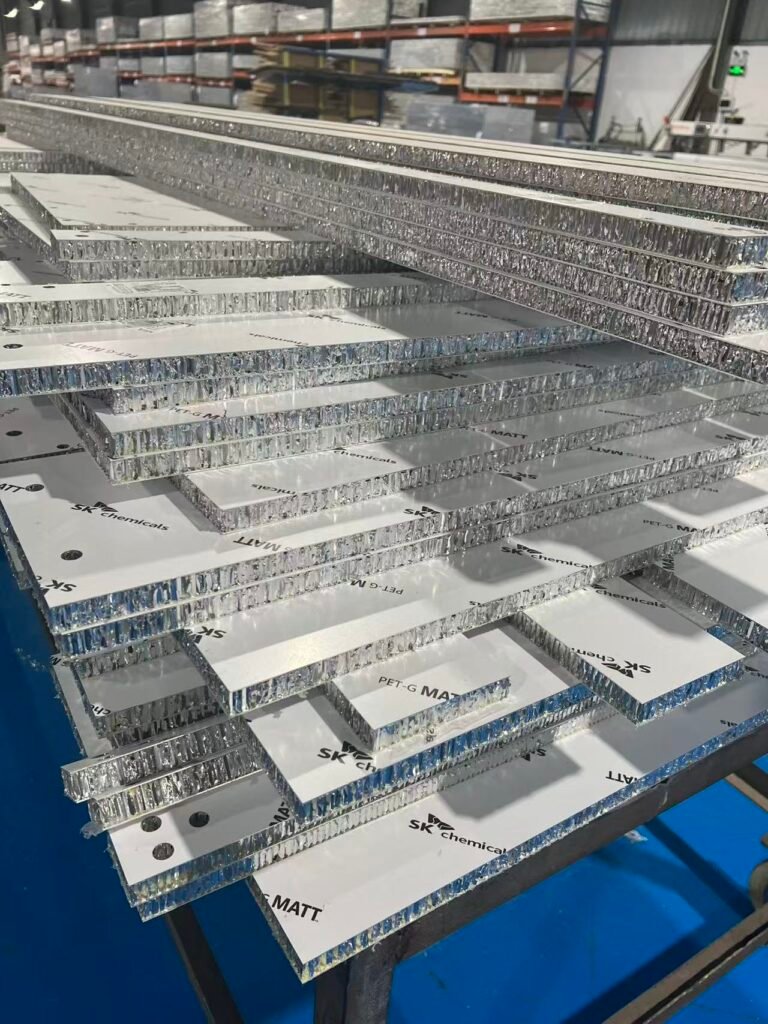
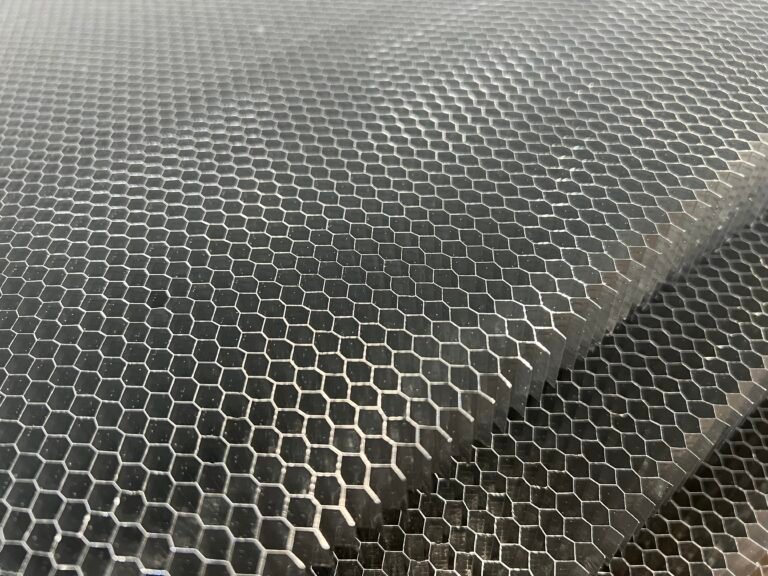
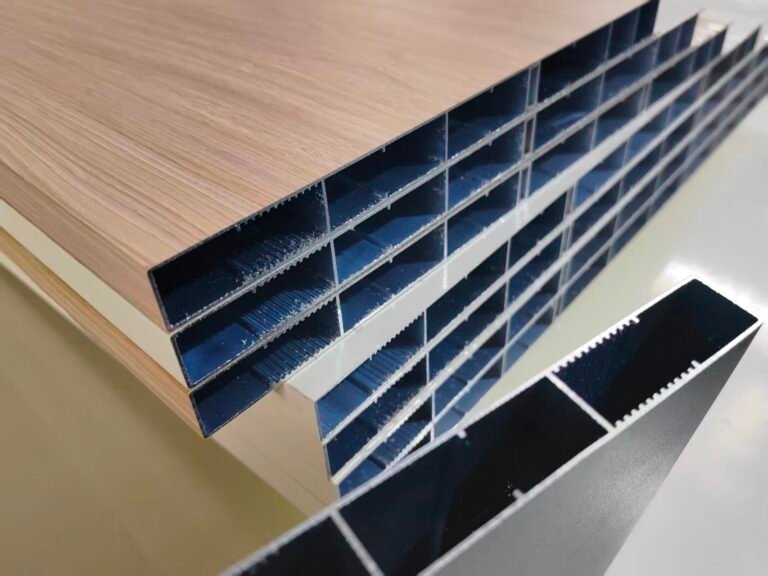
Standard concealed hinges are designed for boards that hold a screw along its full length. A honeycomb panel does not work that way: its core is a set of open cells, and a screw holds only where it crosses a cell wall.
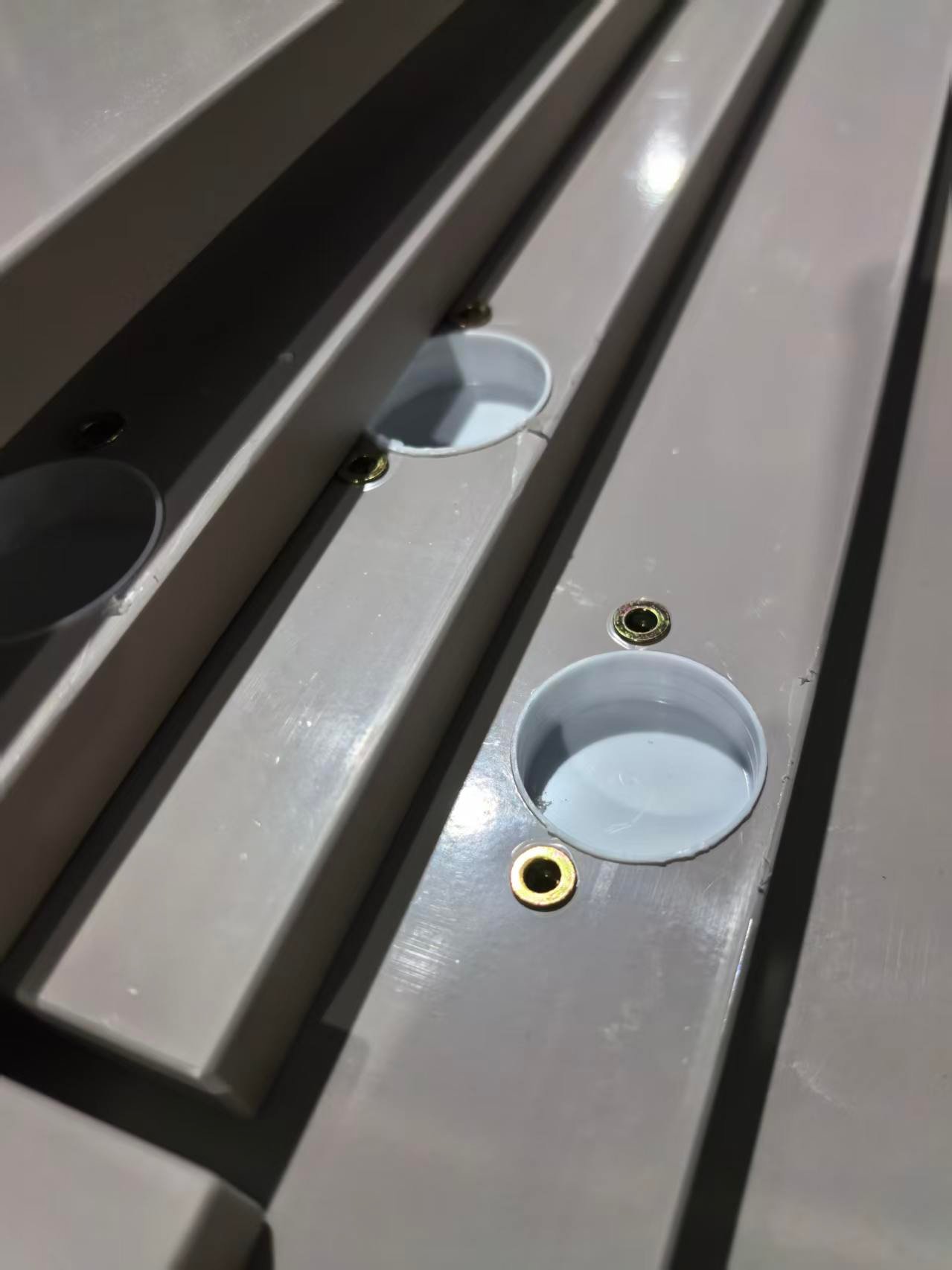
Our answer is not a different hinge but a defined fixing point. We mount threaded brass inserts at the positions the hardware needs, and the hinge screws into the insert rather than into the core. This is our standard method on aluminum honeycomb doors, not an upgrade for large ones.
A hinge screwed straight into the core can feel tight on the bench and come loose in service, and nothing visible from the front explains why.
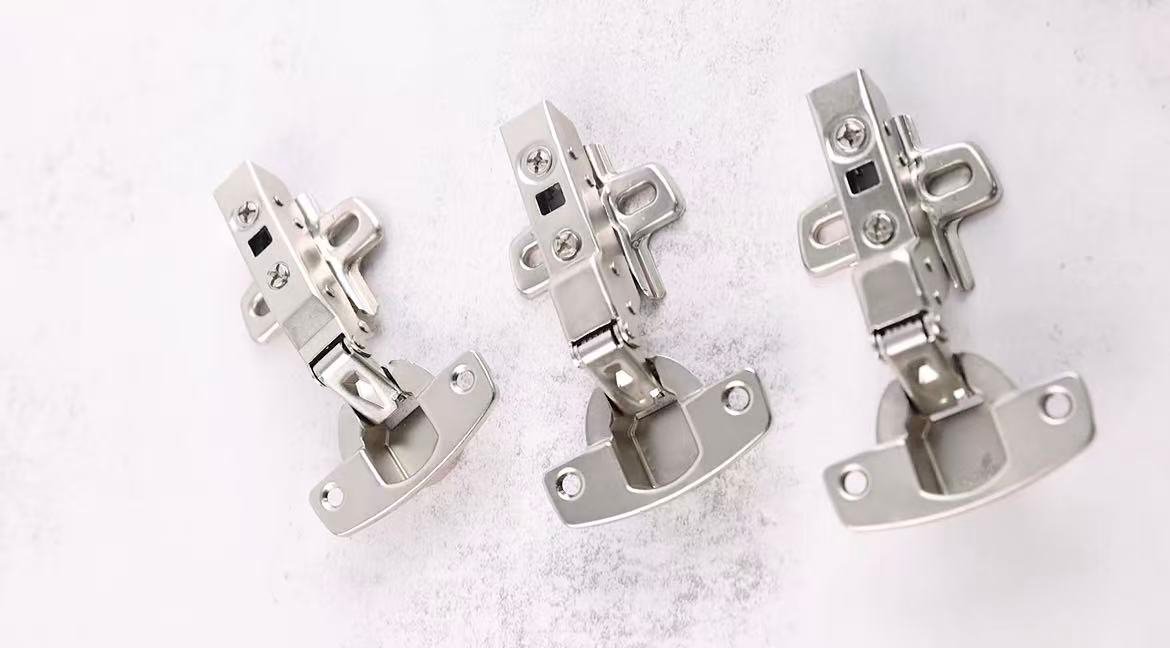
Hinge Type: Straight Arm, Half Cranked, and Full Cranked
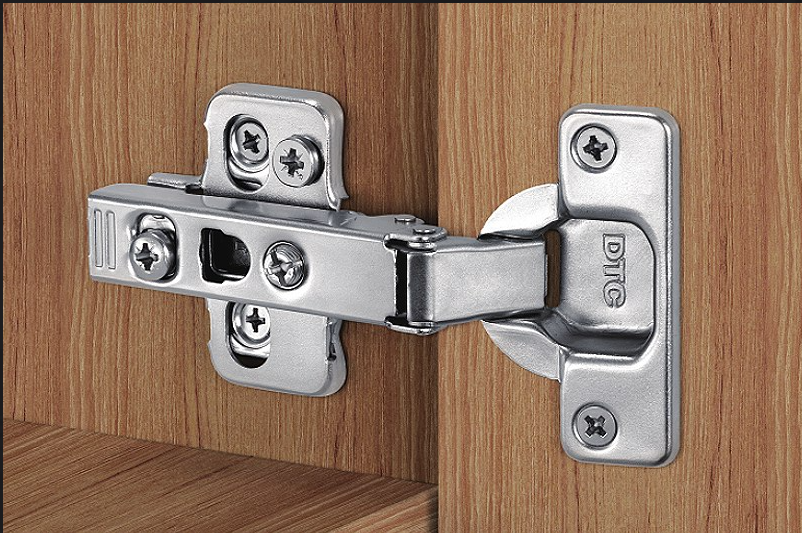
The three common concealed hinge types are straight arm, half cranked, and full cranked: straight arm for full overlay doors, half cranked for half overlay, and full cranked for inset doors. The type is only the first step, because it also sets drilling position, screw fixing area, and door alignment.
The distance from the bore center to the door edge is the same for all three crank types. What changes is how the door sits against the carcass, not where the bore is machined, so the fixing zone behind the bore can be planned while the cranking is still open.
If you are weighing the panel against the alternatives, why honeycomb holds a screw differently from MDF or plywood is where that comparison belongs.
Hinge Position and Door Structure
An aluminum honeycomb door does not have the same internal structure everywhere. Door panels use the same 18 mm construction as the rest of the cabinet, over a 2 × 2 mm or 3 × 3 mm core. The fixing zone is the only part of it that will take a hinge screw.
Two distances are fixed and can be checked on any drawing. The bore diameter and depth are set by the hinge itself rather than chosen per project, and the insert hole centers follow the hinge mounting plate.
The insert layout is the part that changes. Count and spacing follow the door weight and size, and a drawing that carries a layout copied from a smaller door has not been preflighted.
When Door Size Changes
Door height sets the hinge count, with no gaps: two hinges carry a door up to 900 mm, three from 900 to 2000 mm, four from 2000 to 2400 mm, and five above 2400 mm.
Load does not spread evenly: the top hinge carries the most, the bottom the next most, and the hinges between them carry less. The top and bottom fixing zones are the first two to get right on the drawing.
Hardware Preflight Before Sampling
A preflight is only useful if every item has a pass condition. This is the list we run a door drawing against.
| Preflight item | Ready to release | Send it back |
|---|---|---|
| Door height vs hinge count | Matches the bands: 2, 3, 4 or 5 | Carried from a smaller door |
| Bore diameter and depth | Matches the selected hinge model | Drifted from the hinge spec |
| Bore center to door edge | Same for all three crank types | Left to the machine operator |
| Insert hole centers | Fixed distance from the bore | Not tied to the mounting plate |
| Insert layout | Count and spacing set by door weight and size | Reused from a smaller door |
| Fixing zone behind the bore | A brass insert at every hinge position | A screw into the core |
What it prevents is a drawing that survives a visual read and then meets a cell wall or a bore the panel cannot take.
Hardware review is one of the stages from concept to finished product, set out in what designers need to consider before an aluminum furniture project starts.
Conclusion
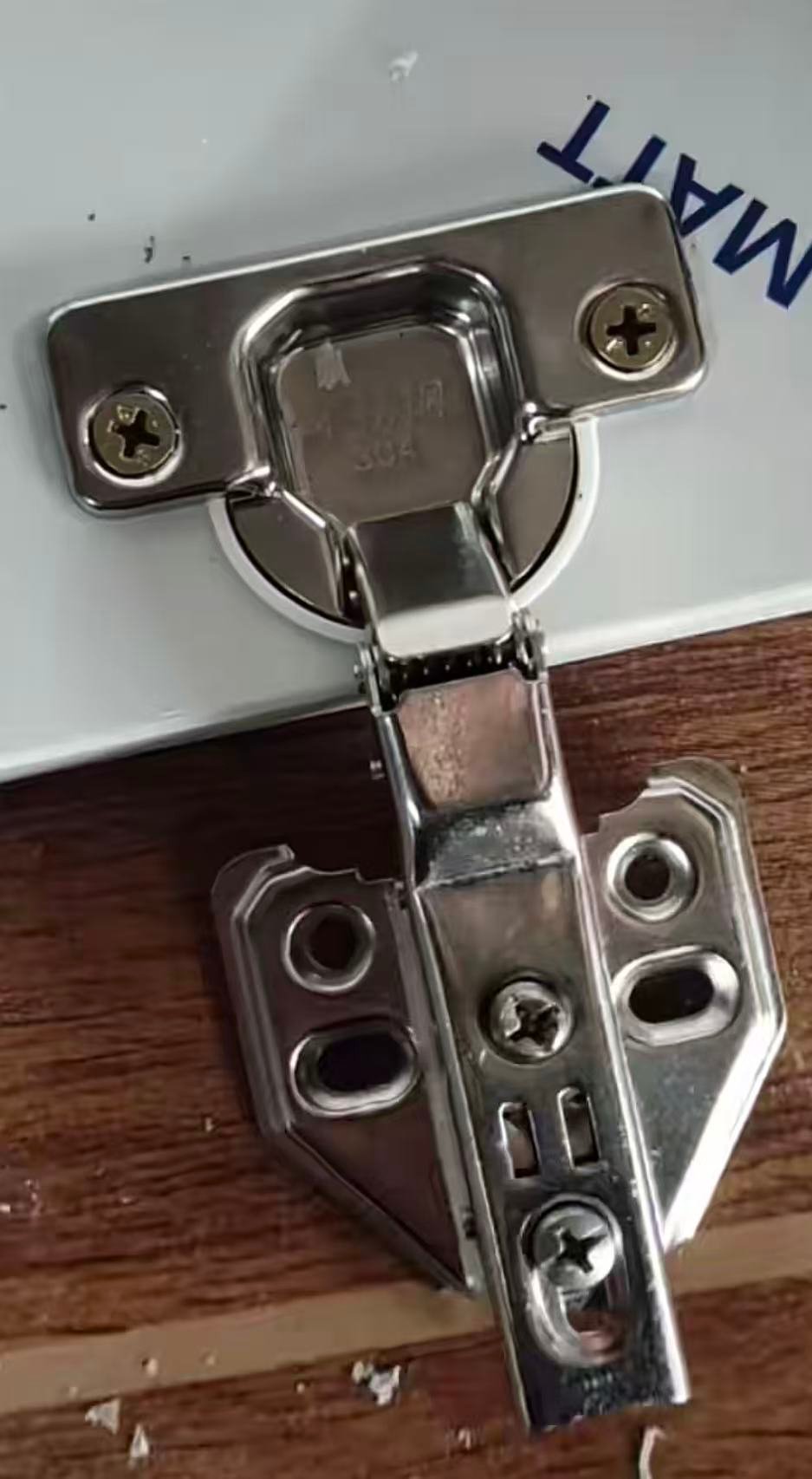
Provided the door was drawn for them, yes. What has to be settled before sampling is the fixing zone: a brass insert at every hinge position, an insert layout sized to the door, a bore that follows the hinge, and a hinge count that matches the door height.
Send Your Drawing for a Manufacturability Review
Send us your door height, hinge model, and hole-position drawing. We will review the panel structure and hinge fixing method before sampling, tell you how many hinges that height calls for, and where the fixing zone should sit.
Once a sample exists, the checks change. See how to approve aluminum cabinet door samples before mass production.