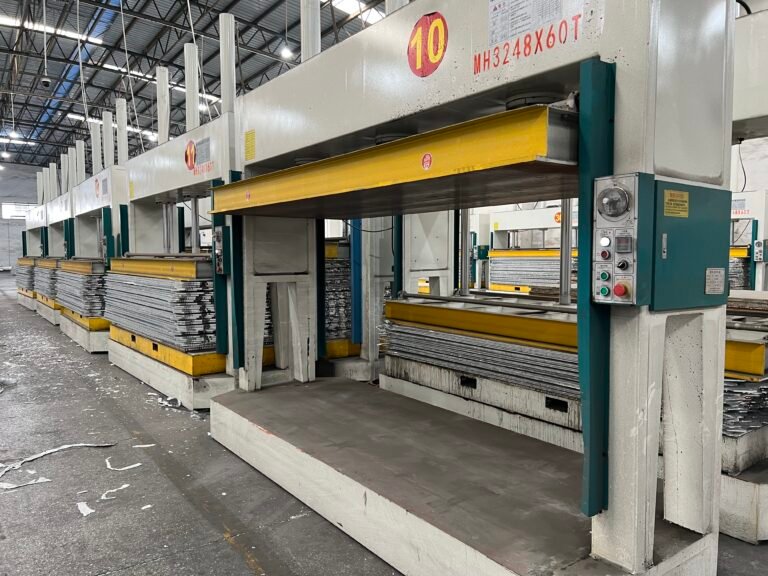
Aluminum Honeycomb vs. MDF vs. Plywood for Cabinet Doors: Choose by Door Size, Environment and Processing
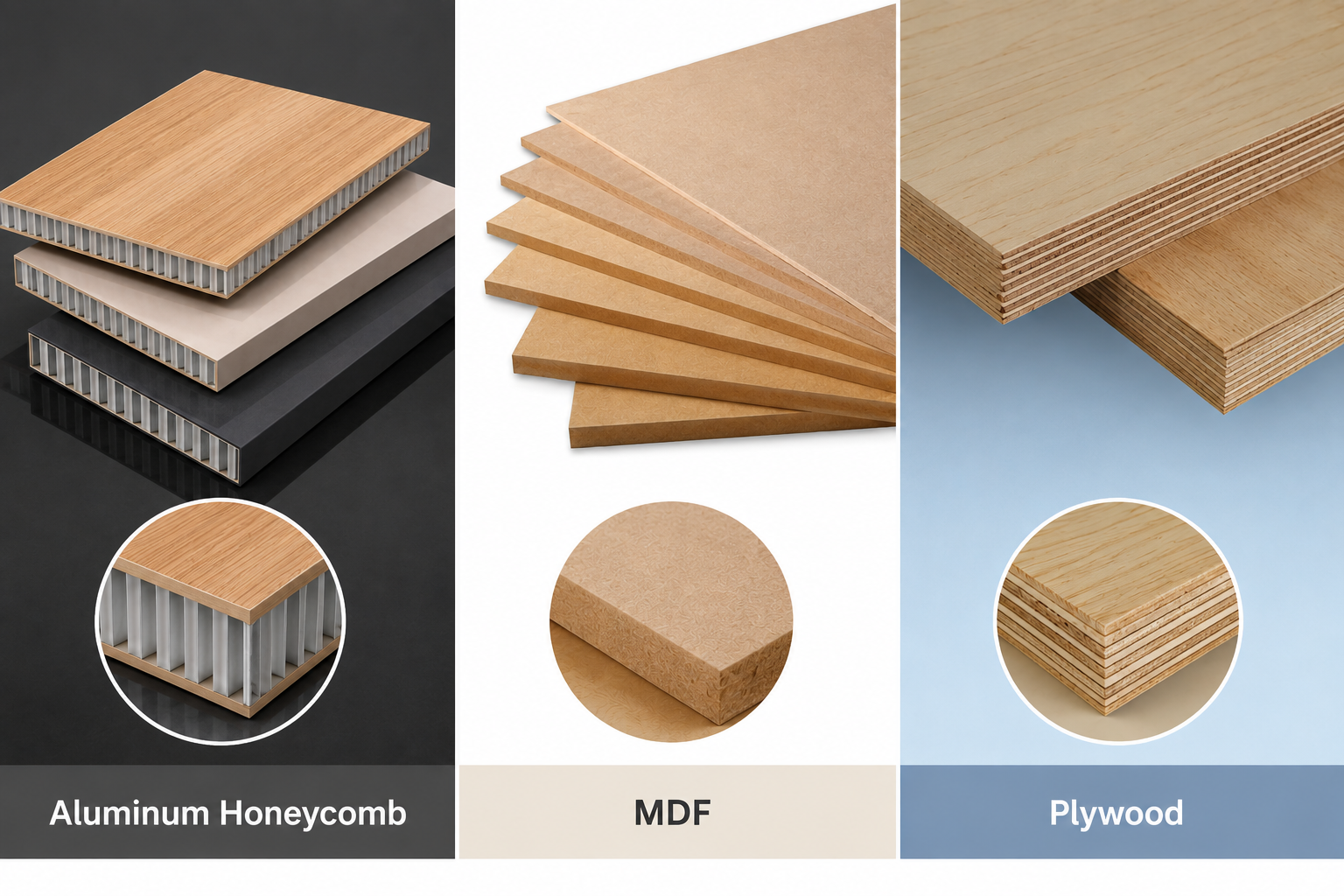
Picking a cabinet door material usually starts with the wrong question: which one is better, aluminum honeycomb, MDF, or plywood? No single material wins across every project. The choice depends on the door size, where it will be installed, the finish, the hardware, how it gets processed, and whether the site team needs to modify it later. Designers, buyers, and owners should weigh how the door will actually be built and used, not just the price of the sheet.
1.Start with door size
Cabinet doors and carcasses behave differently. A carcass leans on several connected panels: sides, top and bottom, shelves, and back. A door is basically one panel hanging from hinges. As the door gets bigger, flatness, weight, hinge load, and long-term stability matter more.
MDF and plywood cover most standard doors and fit established woodworking systems well. Tall doors, oversized panels, and full-height runs need a closer look at thickness, hinge layout, opening method, and total weight.
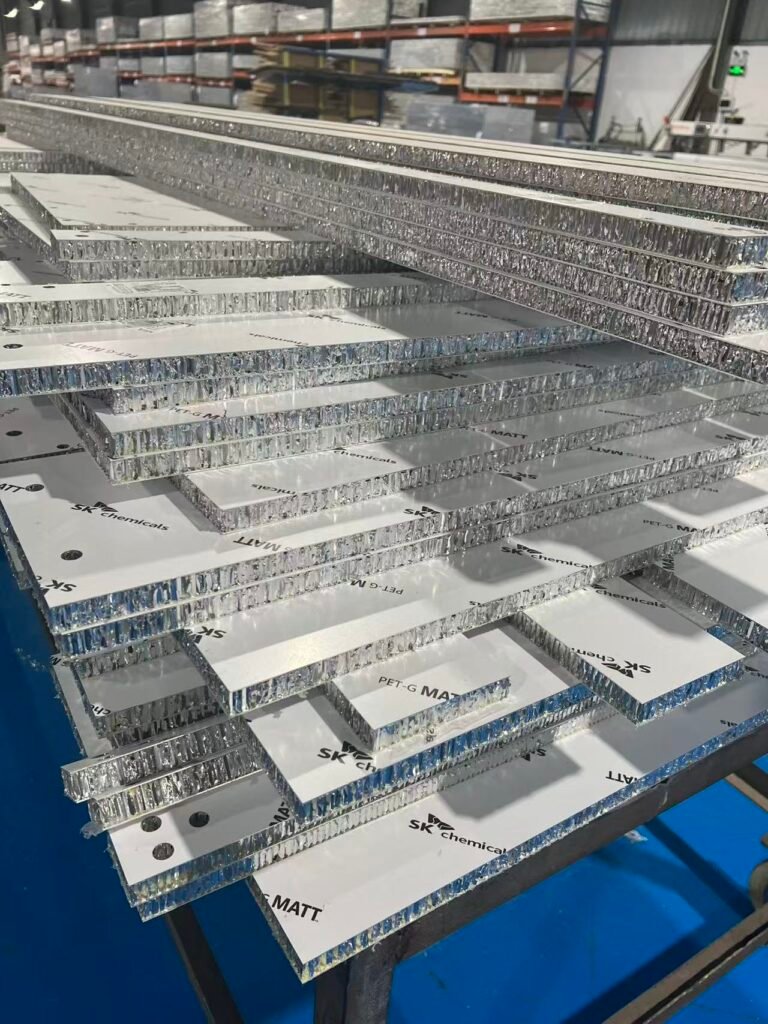
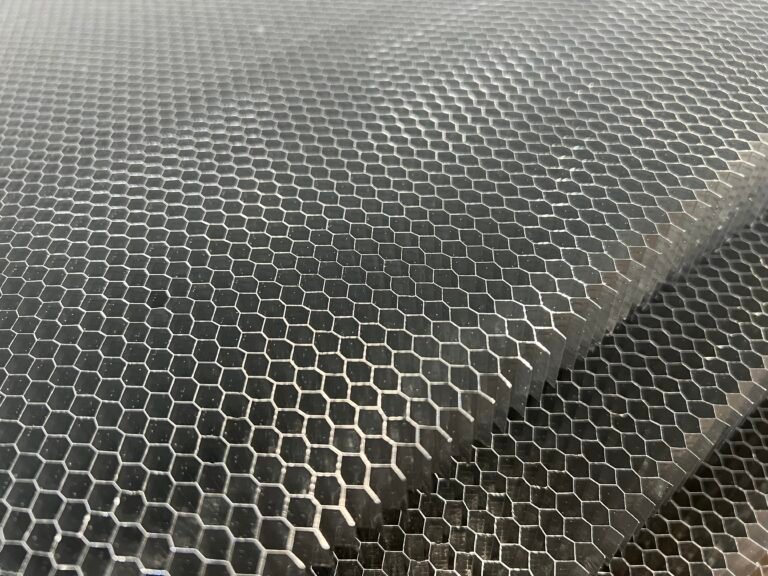
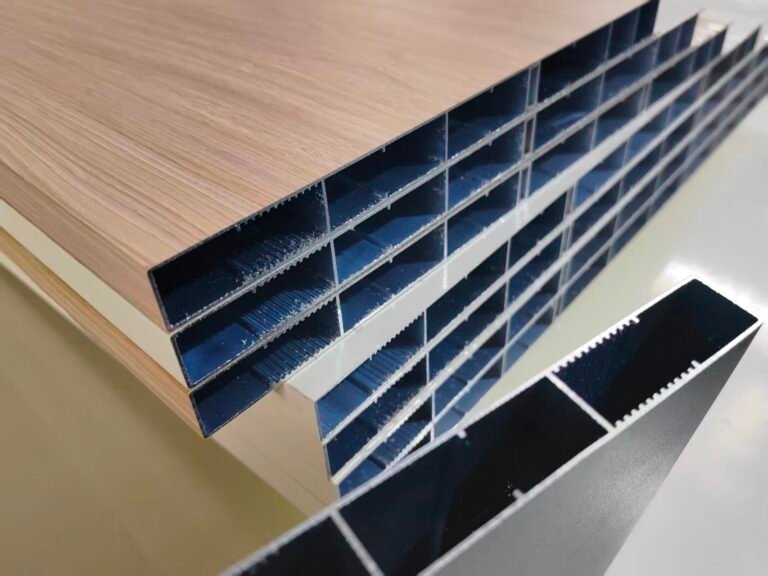
An aluminum honeycomb panel is a sandwich: aluminum face sheets over a honeycomb core. When a project needs a large door but also wants to keep the weight down, honeycomb is worth a look. A big door does not by itself mean honeycomb is the answer. Hinge fixing and edge construction still decide whether the panel works.
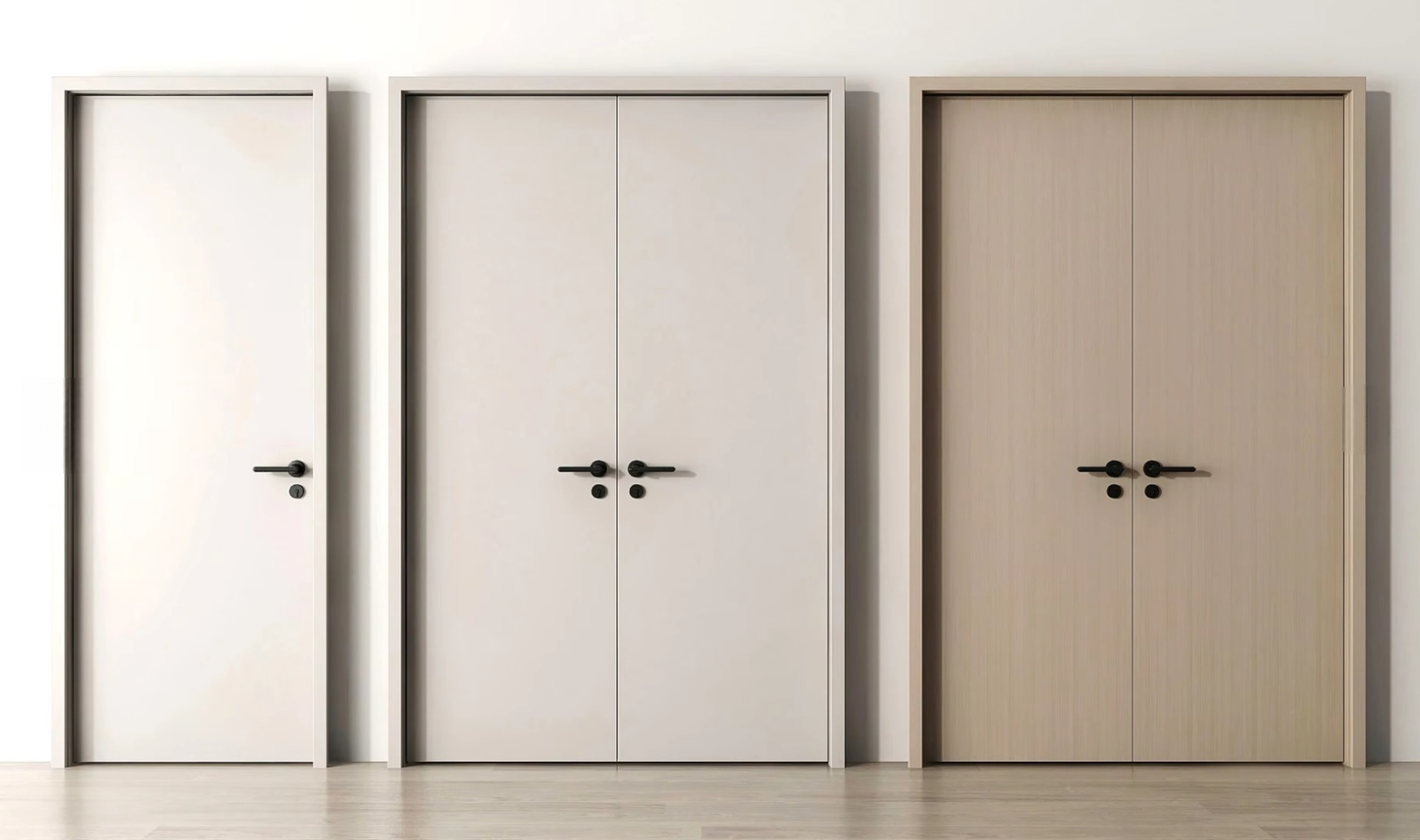
The practical question for a large door is “how large, and how heavy?” rather than “is it big?” A full-height door around 900 mm wide and 2400 mm tall is a different engineering problem from a standard 400 mm upper-door. Three numbers should be confirmed with your panel supplier before you commit to a large-door build:
- Panel density (kg/m² at the finished thickness you will use), because it drives hinge load and how many hinges the door needs;
- Flatness over span, because a large door that starts slightly bowed only gets worse once hardware and finish are applied;
- The maximum unsupported door size the panel is rated for, and what reinforcements or edge profiles the supplier recommends beyond it.
The exact values are product-specific and should come from the manufacturer’s data sheet or a sample test — do not accept a “large door” quote without them. A panel that cannot state these numbers is a panel you are engineering blind.
2.Match the material to the environment
Bedroom and other dry interior doors face easier conditions than kitchen, bathroom, or humid-climate doors.
MDF and similar engineered wood need care wherever moisture lingers. Swelling, edge protection, and surface integrity become real concerns. Plywood holds up differently depending on its glue grade, not just its species or thickness. Two grades matter in practice:
– MR (Moisture Resistant), bonded with urea-formaldehyde or melamine-urea-formaldehyde resin, is rated for dry interiors with only occasional humidity. It is the standard furniture and cabinet grade.
– WBP (Weather and Boil Proof), achieved with phenolic or exterior-grade resins, passes a boil test and is the wet-zone grade — the choice for kitchen sink bases, bathroom vanities, and humid-climate builds.
One caution: WBP is a performance standard, not a single glue name. Ask for the test certificate, not just the word “waterproof.” And glue grade is only part of the story — a cut edge still absorbs water far faster than the panel face, so edges and penetrations fail first regardless of grade.
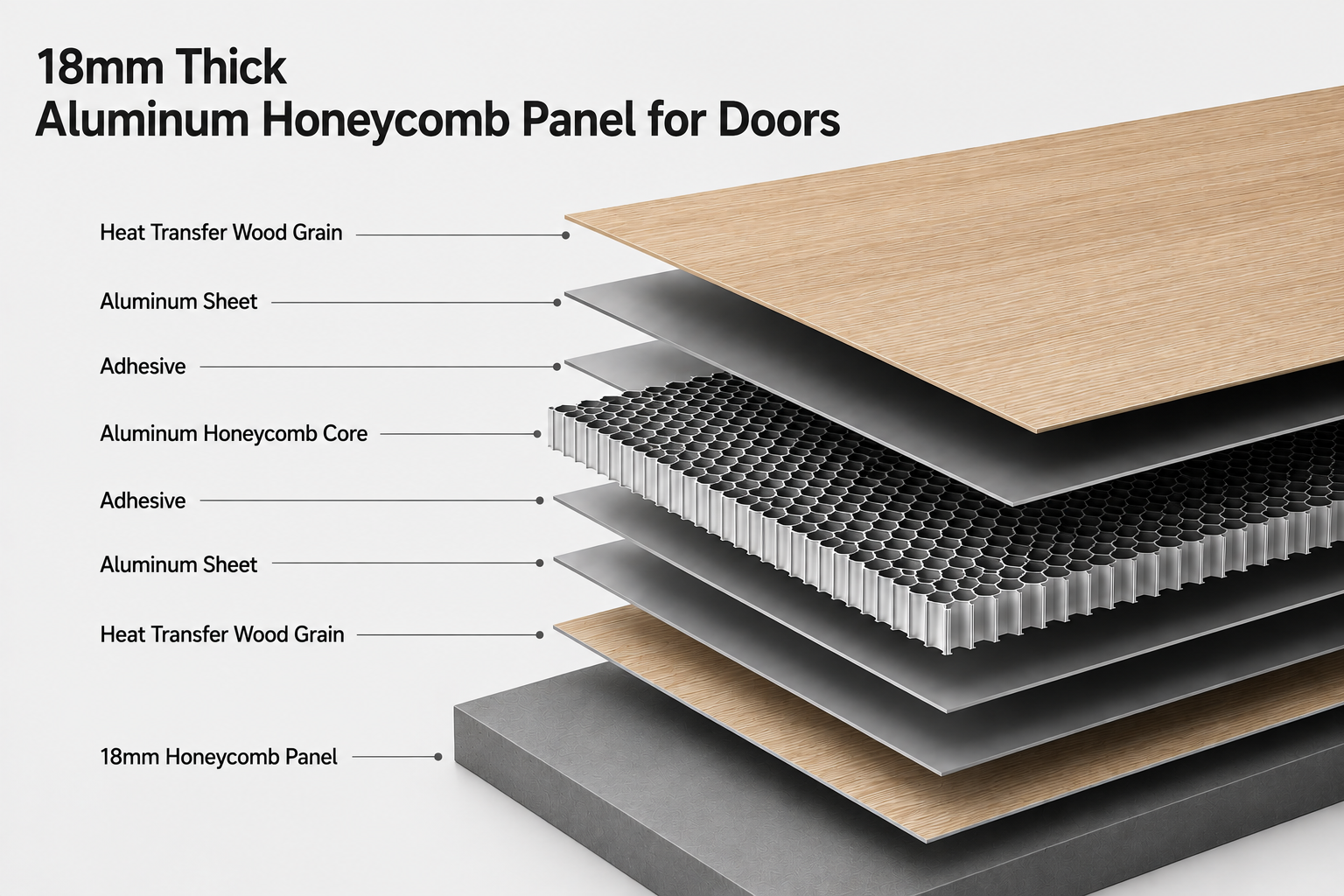
Aluminum honeycomb and aluminum-framed doors skip wood fibers that take in water, which is why they suit moisture-sensitive and stability-focused jobs. A moisture-resistant panel alone does not solve the whole door. Edge sealing, cut-outs, hardware fixing, the surface finish, and joints between different materials all affect how the door ages. On a laminated surface, for example, an unprotected edge lets moisture creep in and can lead to peeling or delamination (see Why Do Aluminum Honeycomb Panel Edges Open? for what this looks like and how to catch it at acceptance).
So the question is not only “is the panel waterproof?” Also ask:
- How are the edges finished?
- What surface finish goes on?
- Will the panel be cut or drilled on site?
3.The finish does more than look good
Pick the finish together with the door build.
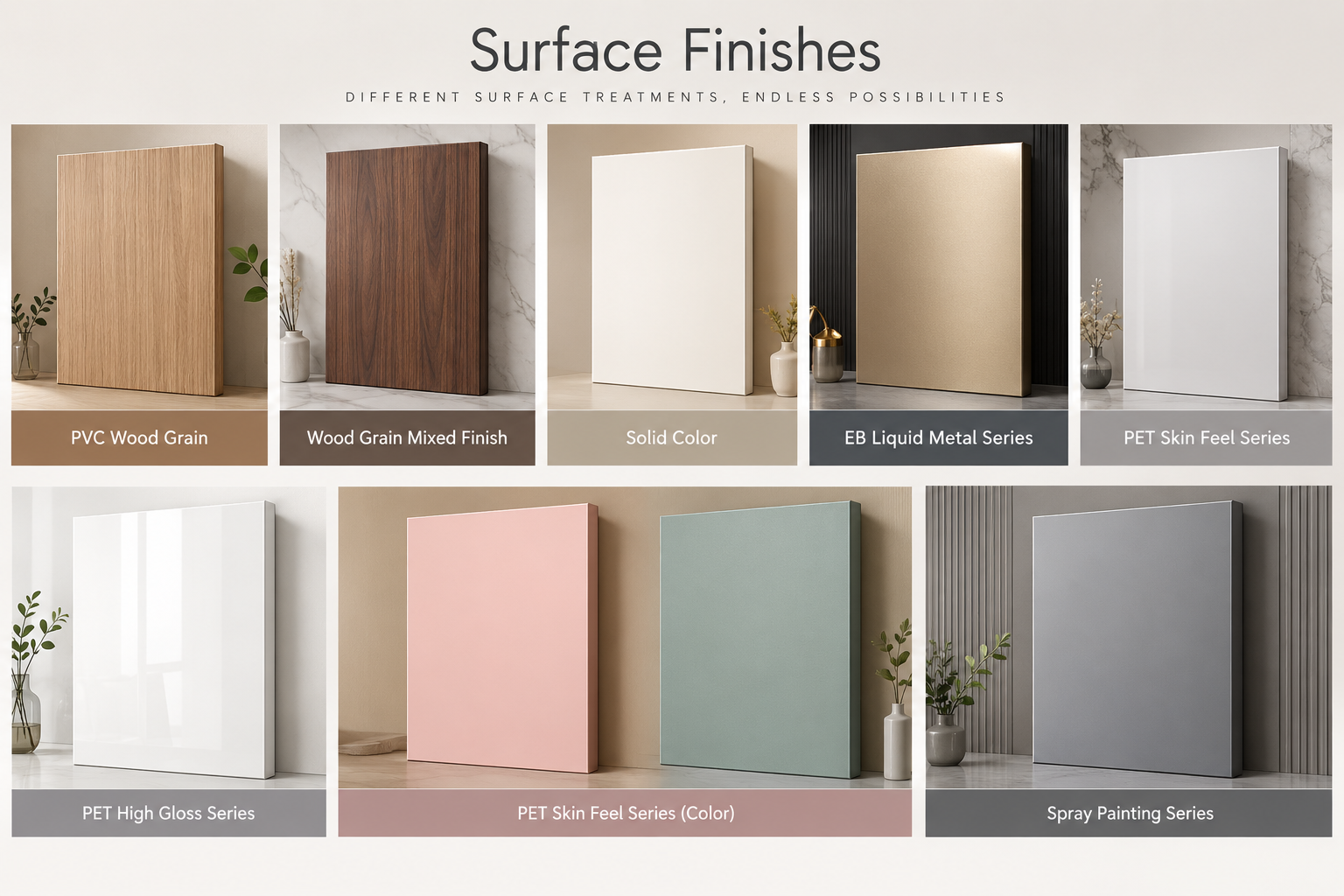
MDF and plywood have mature systems for paint, decorative laminate, and veneer. Aluminum honeycomb takes coating and lamination too. Keep the two routes separate:
– Coating means painted or coated surfaces such as powder coat, PVDF, or polyester.
– Lamination means decorative film bonded to the aluminum, including PET, PETG, and PVC films.
For ordinary indoor cabinets, PET film is a common, practical decorative finish. PETG suits jobs that need better looks or scratch resistance. Balconies, semi-outdoor spots, and sun-exposed areas need a finish with a confirmed weather-resistance grade; a standard indoor laminate will not do there.
Ask for the finish spec, not just the film name. “PET” tells you the polymer, not the weather rating — a PET film’s UV and scratch performance changes with thickness, top-coat, and grade. Request the exact film grade and its rated weather class for any semi-outdoor door, and keep a sample exposed on site before committing a full run.
Start with the environment and the finishing system, not the color.
4.Processing and hardware often beat the panel choice
This point matters most for aluminum honeycomb doors.
MDF and plywood run on conventional woodworking. Most shops can cut, drill, resize, and fit standard hardware on site without a second thought.
Honeycomb needs the processing plan settled early. Key questions:
– How do concealed hinges and other hardware attach?
– Do local reinforcements or inserts go in?
– How are cut-outs and exposed edges finished?
– What edge profile is used?
– Is any on-site second cut allowed?
For honeycomb, the answers to these questions are set by the panel’s construction and the hardware you pick, so they must be fixed before production — not discovered on site. That is the core trade-off this article keeps returning to: the panel choice only works if the processing and hardware questions are answered up front.
5.When honeycomb is the wrong call
A standard honeycomb door build fits poorly when:
– The job depends heavily on on-site cutting, grooving, or drilling.
– The door must carry point loads with no confirmed structural design.
– The install crew only has conventional woodworking tools and methods.
– The schedule leaves no room for sample testing and build verification.
In those cases MDF or plywood give a simpler workflow.
6.Compare total processing cost, not sheet price
The panel price is one line in the budget.
Custom doors also cost in cutting efficiency, fabrication, hardware fitting, transport, site install, and sample development. Honeycomb can be cut to project dimensions, but the build details should be fixed before production starts. It pays to settle hardware and method first, then buy panels, rather than buy first and solve installation later.
Teams using honeycomb doors for the first time should verify a sample. The sample should confirm:
– Door dimensions — the sample matches the largest and smallest door in the run, not just a mid-size one;
– Surface finish — the exact film or coating grade you specified, not a substitute;
– Edge construction — edge profile and sealing match the approved drawing, with no exposed core;
– Hardware fixing method — hinges and inserts are mounted and hold under an open/close test at the real door weight;
– Actual open/close performance — the door opens and closes smoothly with no binding, sag, or edge movement after repeated cycles.
7.How to choose
Run the selection in this order:
Door size → installation environment → surface finish → hardware and processing method → on-site modification needs → budget and sample requirements
Before the final call, use this comparison as a checklist. It is directional, not a spec — the “large door” and “moisture” columns depend on the exact product, so confirm the supplier’s data sheet against your project.
| Factor | Aluminum Honeycomb | MDF | Plywood |
|---|---|---|---|
| Weight (large door) | Lowest of the three; the main reason to choose it for full-height doors | Heavier at large sizes | Middle; heavier than honeycomb |
| Flatness on tall doors | Best over long spans | Good, needs straight panels | Good, varies by grade |
| Moisture resistance | Highest (no wood fibers) | Low; edges must be sealed | Middle to high, set by glue grade (MR vs WBP) |
| Standard processing | Needs pre-planned construction, inserts, and edge treatment | Conventional woodworking throughout | Conventional woodworking throughout |
| On-site modification | Limited; confirm what the supplier allows | Easy | Easy |
| Relative cost | Varies by build details; compare total processing cost | Low sheet price, mature systems | Middle; WBP costs more than MR |
| Best-fit door type | Large-format, lightweight, moisture-sensitive, custom aluminum systems | Standard interior doors in dry spaces | Standard doors, wet-zone boxes with WBP grade |
Aluminum honeycomb is not meant to replace every door material. It fits large-format doors, lightweight builds, moisture-sensitive spaces, and custom aluminum door systems. MDF and plywood stay practical where conventional woodworking, flexible on-site changes, or established furniture production lead the job.
There is no universally best material. There is only the build that fits the project.
If you decide on aluminum honeycomb panels after weighing the factors above, send us your door size, environment, finish, and processing plan, and we will help screen the right construction