How to Manufacture High-Quality Aluminum Honeycomb Cabinets: A Complete Step-by-Step Guide
Introduction
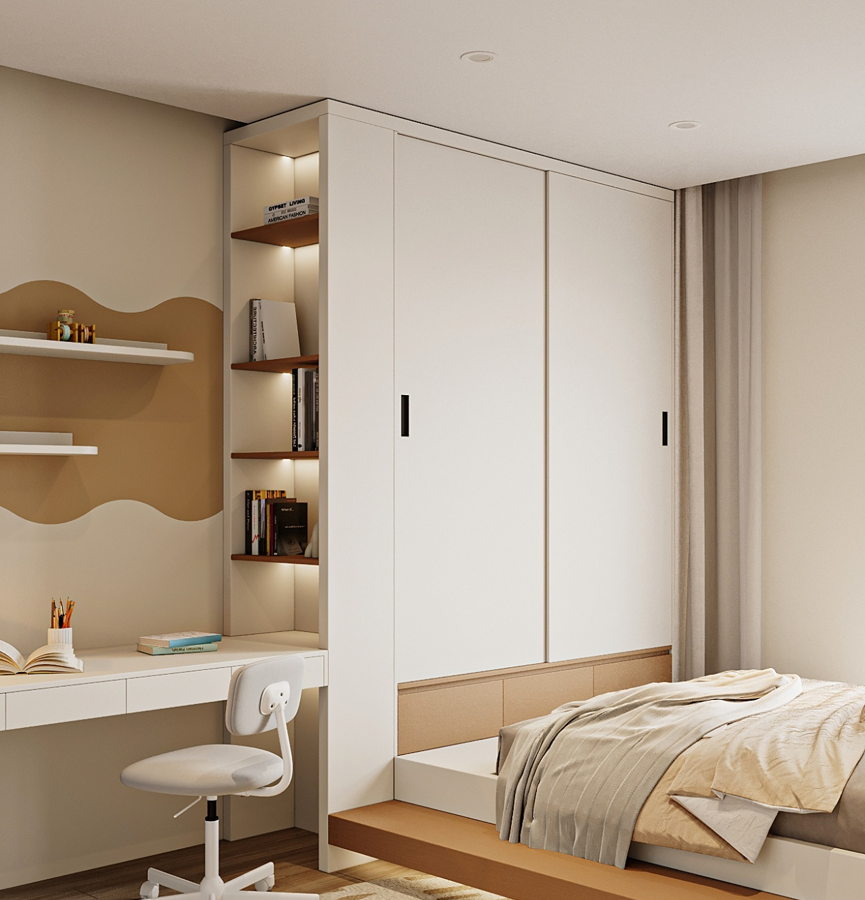
When sourcing aluminum honeycomb cabinets, buyers usually prioritize appearance, price and lead time. However, the manufacturing process is what truly differentiates durable, reliable cabinets from ordinary ones. It directly impacts long‑term performance, structural stability and installation precision.
This guide covers the full production workflow of premium aluminum honeycomb cabinets, from engineering analysis and CNC machining to pre‑assembly inspection and protective packaging. All processes follow three core targets: strict dimensional accuracy, strong structural strength and stable quality for all orders.
1. Drawing Validation & Material Nesting
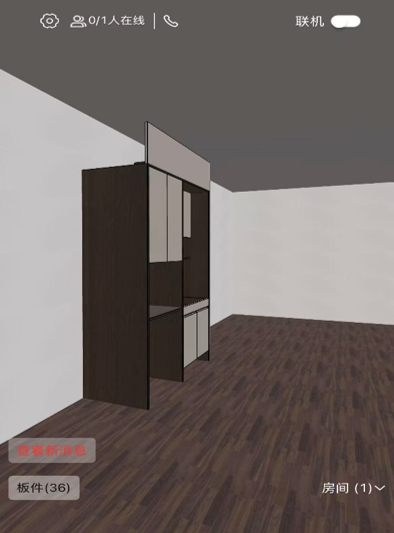
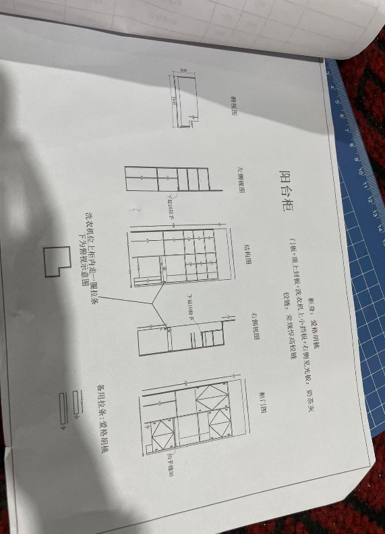
Precision cabinet production starts with engineering review before any material gets cut.
Our engineering team thoroughly checks design drawings and verifies key details:
- Overall cabinet dimensions
- Exact hole positions and tolerance requirements
- Hardware size and compatibility
- Assembly logic and structural requirements
- On‑site installation sequence
After drawings are confirmed, data is imported into nesting software. The software optimizes panel layout on raw aluminum honeycomb sheets to cut down leftover material.
Each panel is assigned a unique barcode for full‑cycle traceability from machining to final inspection, so any problem can be located and solved quickly.
Why this step matters
- Builds the basis for error‑free manufacturing
- Reduces material waste and total costs
- Improves overall production efficiency
- Keeps full transparency across the production line
2. CNC Cutting & Front-Side Pre-Drilling
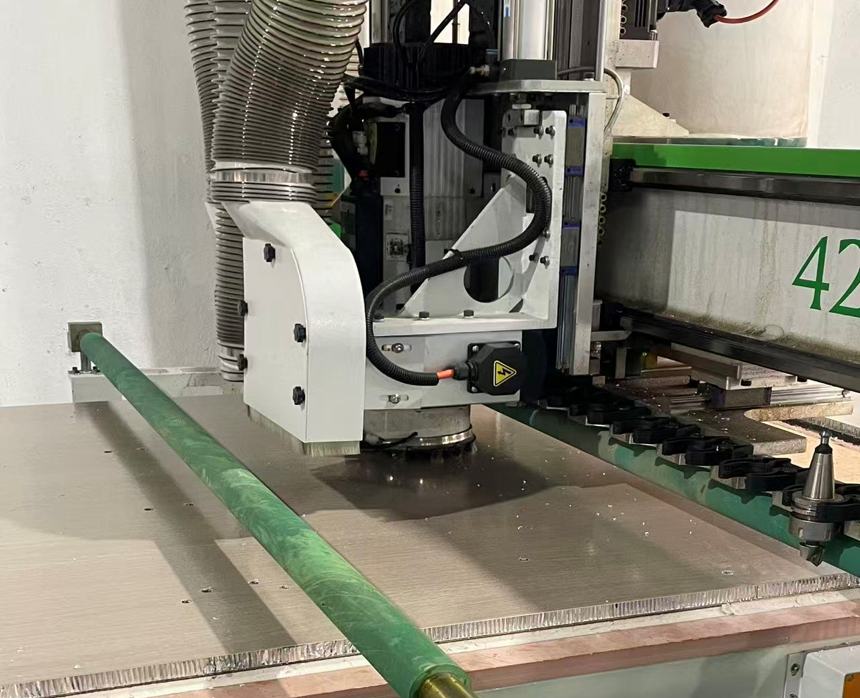
Once production files are approved, aluminum honeycomb sheets go into CNC equipment, which completes panel cutting and front‑side pre‑drilling.
Key process: We drill front holes first before final cutting. Drilling on intact, stable sheets minimizes position offset and improves machining accuracy.
Combined with optimized nesting layout, this step improves material utilization, saves production time and ensures consistent part quality.
3. Edge Banding & Sealing Treatment
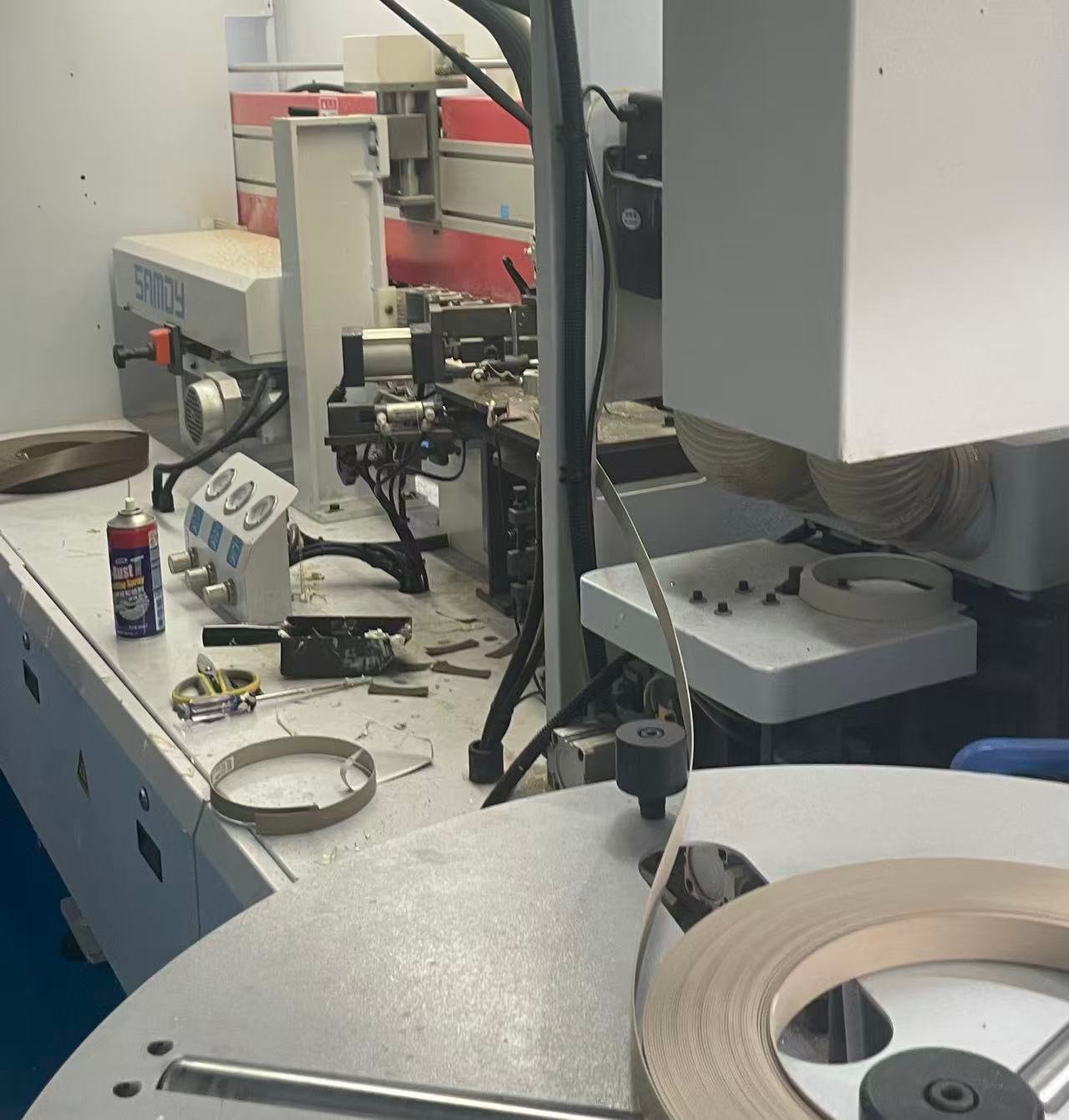
A After cutting and front‑side drilling, panels move to edge banding. This procedure is critical for moisture resistance and structural durability.
Standard edge banding includes four main steps:
- Inject adhesive into the honeycomb core along panel edges for firm bonding
- Press edge‑banding material tightly against panel sides
- Trim excess banding material to be flush with panel surfaces
- Polish edges for a smooth, seamless finish
For curved or irregular panels, special profile edge‑banding machines deliver the same high‑quality finish as regular rectangular panels.
Well‑sealed edges stop moisture, dust and contaminants from entering the honeycomb core. They extend cabinet service life, improve appearance and strengthen panel rigidity.
4. Precision Side-Hole Drilling
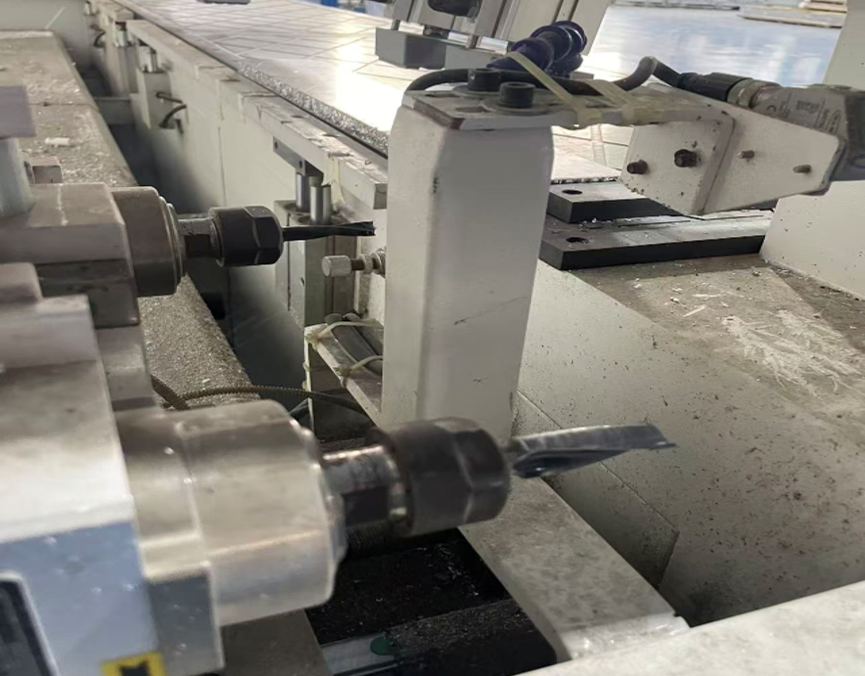
Accurate side‑hole drilling enables smooth, gap‑free cabinet assembly. Even tiny errors may cause misaligned joints, loose connections and extra on‑site adjustments.
We use dedicated side‑hole drilling machines with infrared positioning. All connector holes are drilled strictly according to engineering drawings to match assembly hardware.
High‑precision pre‑drilled side‑holes speed up field installation and avoid on‑site rework.
5. Hardware Insertion & Pre-Installation Preparation
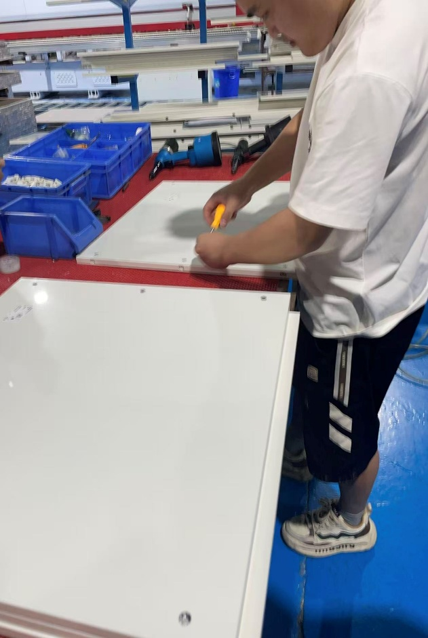
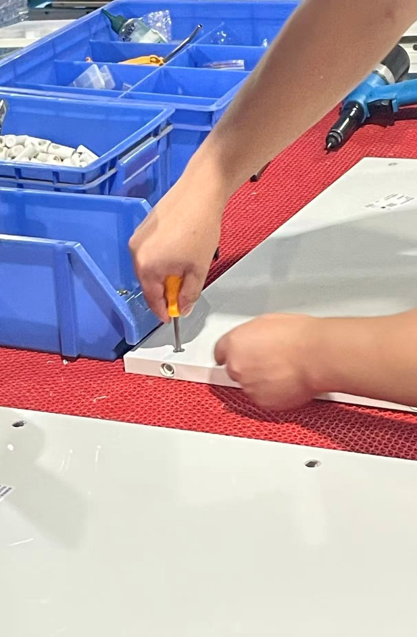
When all holes meet specification, workers pre‑install hardware before cabinet assembly.
Cam lock 3‑in‑1 connectors with insert nuts are widely used for panel furniture. One set contains cam lock, connecting bolt and plastic insert nut, creating solid, tight joints between panels.
Operators fit hardware inserts into pre‑drilled holes and check four key points:
- Hole dimensions match hardware specs
- Hardware fits panels and design requirements
- Every fitting is installed in correct direction
- Panel orientation matches assembly sequence
Pre‑installed hardware removes guesswork on‑site and makes final assembly much faster.
6. Full Pre-Assembly Quality Inspection
Strict quality control separates premium cabinets from mass‑produced goods, and pre‑assembly is one of the most effective inspection methods.
After machining and hardware pre‑installation, our QC team fully assembles cabinets following real‑world installation steps. This dry‑assembly test simulates actual installation conditions to find defects before shipment.
Inspection checklist during pre‑assembly:
- Overall dimensional accuracy and consistency
- Joint alignment and flush surface
- Uniform gaps between panels and doors
- Smooth movement of doors and drawers
- Full hardware compatibility
- Practicality for on‑site installation
This step catches nearly all potential installation issues in advance and reduces unexpected troubles at project sites. Cabinets can enter packaging only after passing inspection.
7. Multi-Layer Protective Packaging
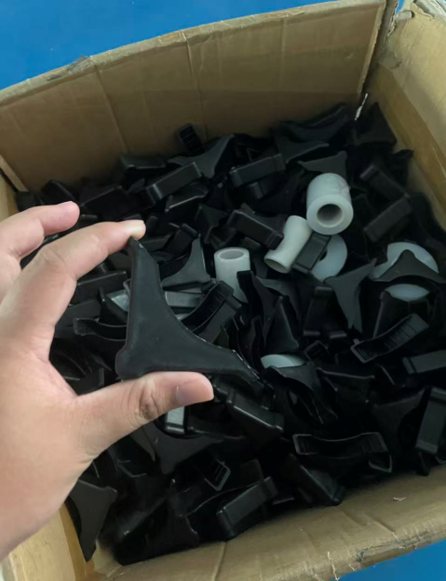
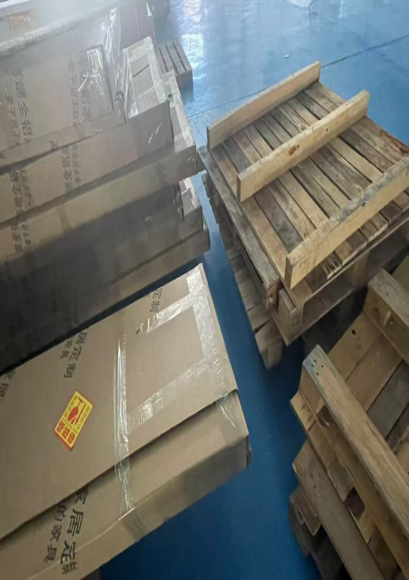
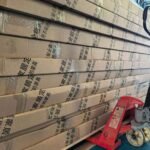
Even the best-built cabinet can be damaged in transit without proper packaging—especially for long-distance ocean freight. That’s why we use a multi-layer protective packaging system for every order.
Each finished panel is wrapped and protected in stages:
- First covered with honeycomb cardboard for cushioning
- Reinforced with flat cardboard for surface protection
- Fitted with rigid corner protectors to prevent edge damage
- Fully wrapped with stretch film to hold everything in place
- Finally stacked and secured to wooden pallets for shipping
This layered system effectively reduces the risk of scratches, dents, deformation, and other transit damage, ensuring cabinets arrive at your site in perfect condition.
Why a Standardized Production Process Matters?
All steps above form a complete, controlled production system. Standardized manufacturing brings practical benefits for buyers:
- Stable, consistent quality across batches and orders
- Faster, simpler on‑site installation with fewer adjustments
- High dimensional accuracy for premium visual results
- Less material waste for more competitive pricing
- Good hardware compatibility and fewer replacement parts
- Fewer after‑sales problems and lower long‑term costs
- Reliable and predictable project lead‑time
For contractors, distributors and furniture brands, these advantages mean lower project risk, fewer on‑site troubles and higher end‑customer satisfaction.
Ready For Your Next Aluminum Cabinet Project? Get In Touch
Choosing the right manufacturer is not only about production capacity. It requires solid engineering capability, advanced equipment, strict QC and dependable after‑sales support to deliver stable project outcomes.
In our factory, every aluminum honeycomb cabinet panel follows standardized workflows. We guarantee precision, durability and consistent quality for every batch.
We offer reliable manufacturing solutions for custom residential cabinetry, commercial interior fit‑outs and large‑scale hospitality projects.
Contact us to share your requirements or request a detailed quotation.