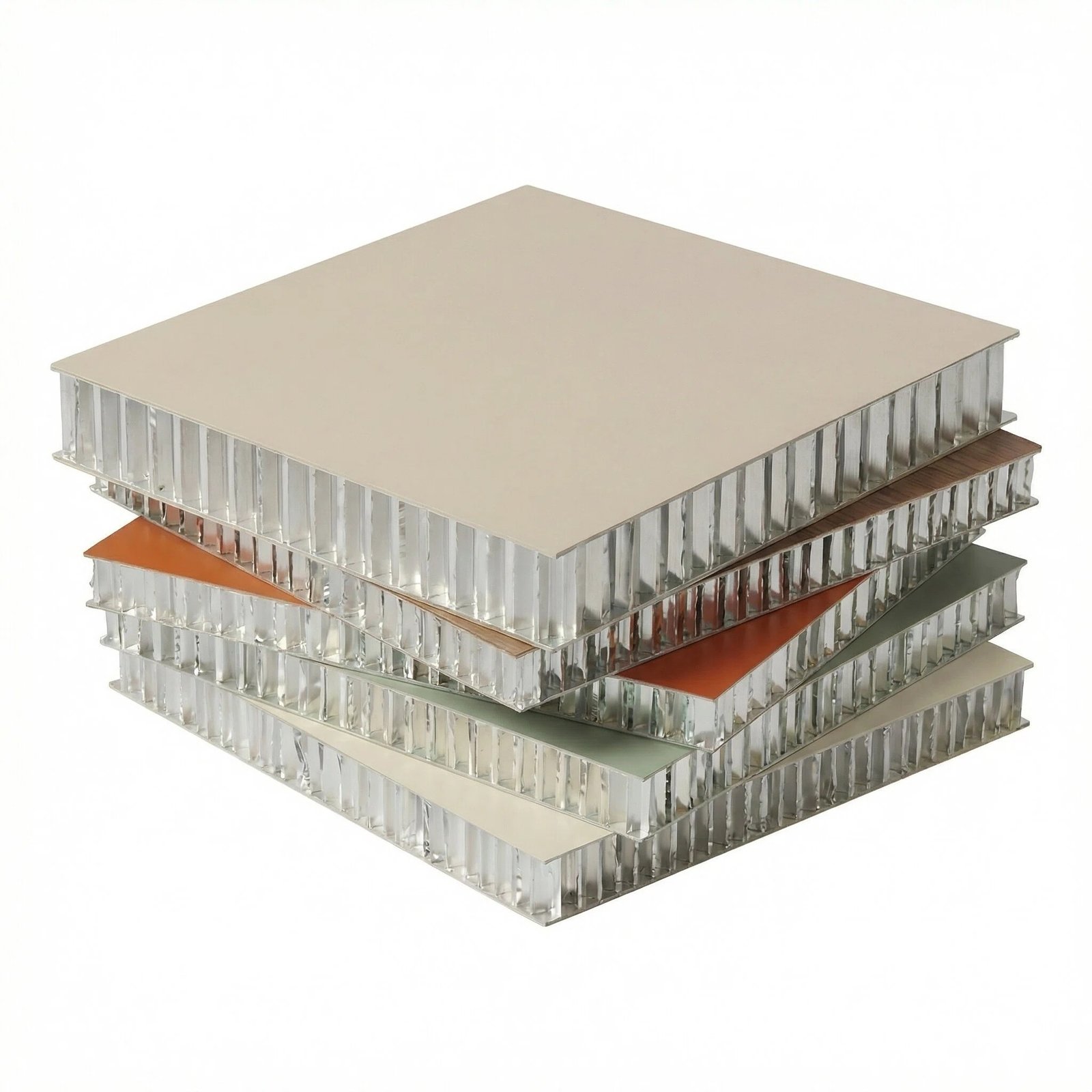
The specification, in one table
| Parameter | Carcass | Door | Balcony / low load | How to check on a sample |
| Total thickness | 12–18 mm | 10–14 mm | 10 mm | Caliper on a cut offcut |
| Aluminium skin | 0.7–1.0 mm | 0.7–1.0 mm | 0.7 mm | Not reliably. See the next section |
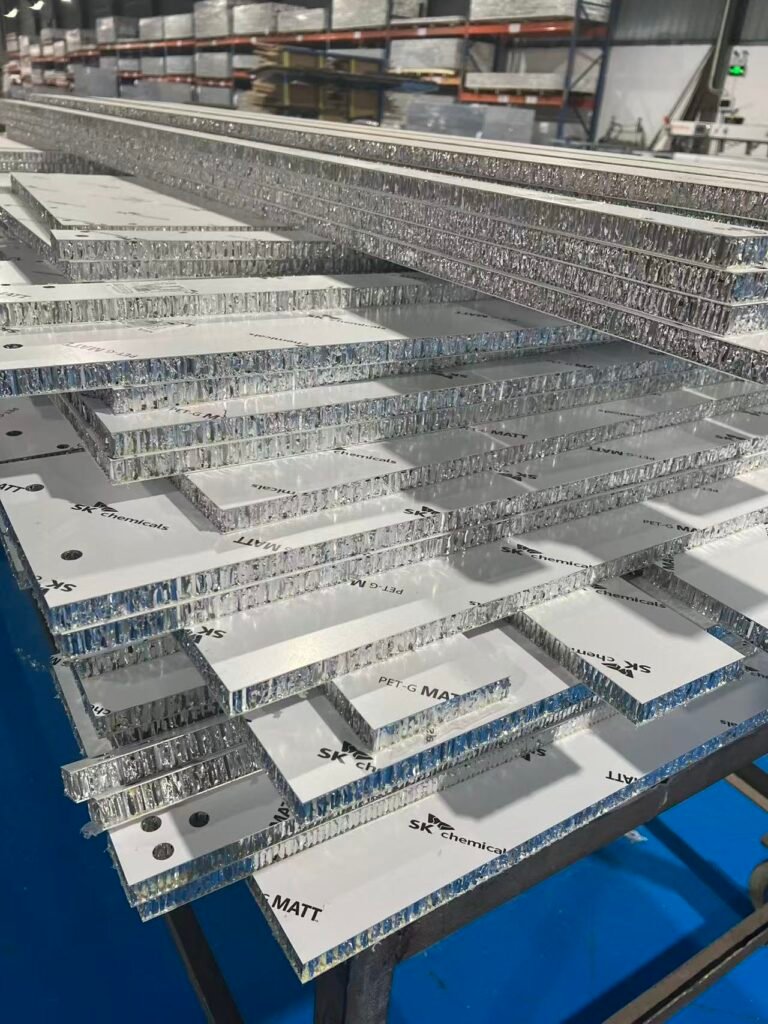
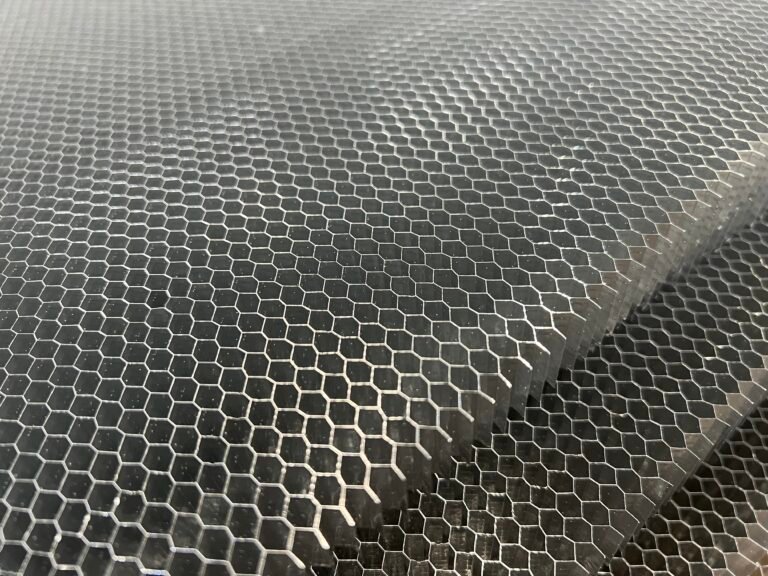
| Core cell size | 2×2 mm | 2×2 mm | 3×3 mm acceptable | Count the cells across 10 mm of cut edge |
| Edge sealing | Required | Required | Required | Ask which process, not just whether |
| Hardware fixing | Pre-set inserts | Pre-set inserts | Pre-set inserts | Ask for insert type and size |
Two notes on the table.
Ten to eighteen millimetres covers most residential furniture, so specifying more thickness than the application needs adds cost and weight without adding performance.
The door figures assume a standard door height. Above 2.4 metres the thickness number stops being the deciding variable, and hinge count and spacing start to matter more than the panel. If your doors are full-height, treat the panel spec and the hardware layout as one decision.
Why each one fails
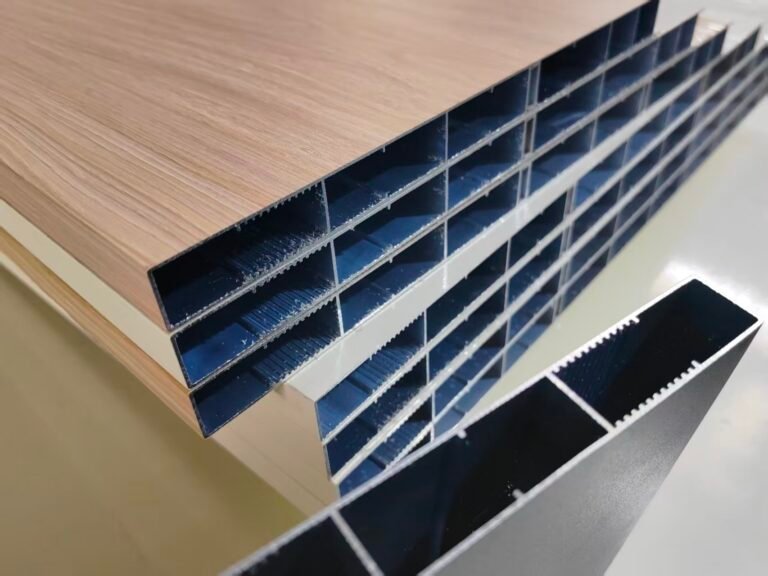
Skin thickness carries the bending load. In a sandwich panel under bending, the two skins take almost all of the tension and compression, and the core mainly resists shear. That is why a panel with thin skins feels weak even when the total thickness on the quote looks generous, and why the most common buying error is comparing total thickness across suppliers without asking what sits under the finish.
Cell size controls how well the skin is supported. Cell size sets how many cell walls sit under a given area of skin. More walls means better local support and a flatter face, which is why 2×2 mm is the default for residential furniture and 3×3 mm is acceptable at light loads. Large cells such as 4×4 mm leave the skin spanning further between walls, which costs stability and, on thin skins, can let the cell pattern read through the face. Smaller is not free, though: it adds weight and cost.
Edge sealing is about corrosion, not only water. An unsealed cut edge in a humid room lets moisture into the core. Once inside, it does more than wet the panel. The core can corrode, the adhesive bonding skin to core can lose strength, and the exposed aluminium at the cut oxidises into white spotting along the joint. In Southeast Asia this is usually the first failure to appear.
Rigidity and hardware holding are two different problems. A stiff panel does not automatically hold a hinge. That distinction has its own section below.
The mistake that is not on any quote
Suppliers quote skin thickness as a number, and buyers assume they can check it. On a finished panel they mostly cannot.
A quoted “0.8 mm” can mean 0.8 mm of bare aluminium, or it can mean 0.8 mm once the finish film and the adhesive are counted, which can leave as little as 0.5–0.7 mm of actual metal. After lamination, neither a caliper nor a weight-per-area calculation separates the three layers well enough to prove which one you received.
The check has to move upstream. Ask for the coil thickness certificate before lamination, and ask the supplier to state in writing whether the quoted skin thickness includes the finish. A supplier who will not put that in writing is quoting a number, not a specification.
Honeycomb does not hold screws
This is the error that costs the most, because it does not appear until the cabinets are on site.
A honeycomb core is mostly air. A screw driven into it has nothing to bite, so it either spins or pulls out under load. Hinges and handles are exactly the places where that load repeats thousands of times, which is why a loose hinge is the most common field complaint, and why it is usually blamed on the panel being too flexible. It usually is not. It is the fixing.
The standard remedy is to put a threaded insert into the panel before assembly, a rivnut, known in the Chinese trade as a 拉姆, so the screw has metal to grip.
So when you compare quotes, ask the question most buyers skip: how is the hardware fixed, and is the insert fitted at the factory or on site?
Where a cheap quote quietly loses material
Beyond the four headline numbers there are parameters that rarely reach a quote and change what arrives.
- Core foil thickness. Two panels with the same cell size can use different foil gauges. Thinner foil, weaker core.
- Skin alloy. Aluminium comes in different series, and recycled content behaves differently from primary alloy. A skin that looks identical on arrival can dent and crack differently in service.
- Bonding process. The skins and the core are held together with adhesive. How that bond is made, and with what, decides whether the panel delaminates.
- Edge banding type. Not all sealing performs the same in humidity.
Add one more that is not a material at all: batch consistency. A sample that matches and a container that does not is a common and expensive outcome. Ask whether the parameters are held within a stated tolerance across a production run, and whether a retained sample ships with the order.
What to ask your supplier, in writing
- Total thickness, and whether that is the panel or the panel plus finish.
- Skin thickness, stated as bare aluminium, with the pre-lamination coil certificate.
- Core cell size in mm, plus the core foil gauge.
- Skin alloy series.
- Edge sealing process, not just “sealed.”
- How hardware is fixed: insert type, insert size, and whether it is pre-fitted.
- Bonding process and adhesive type.
- What tolerance holds across a production batch, and whether a retained sample ships with the order.
Eight questions. A supplier who answers all eight in writing is a supplier you can hold to a specification. One who answers four and waves at the rest is quoting you a number.
Next steps
If you are specifying honeycomb panels for all-aluminum furniture in Indonesia or Malaysia, send us those eight questions. We will answer them in writing.
We will also send a sample you can cut open. Count the cells, look at the edge seal, and check the skin thickness against the coil certificate before you order a container.